Peegle Live - Live Stream
- 2.4
- Rating
- 1.00M
- Installs
- Free
- Price

 Analysis by App-foxy
I approached Peegle Live as a social entertainment app rather than as a simple video player. Its purpose is to bring people into live online interaction, which can feel more immediate than scrolling through ordinary posts. At the same time, live social platforms deserve a more careful look than their cheerful store summaries suggest. The important questions are not only whether the streams are entertaining, but also how comfortable you feel around public interaction, spending prompts, account access, and mature content.
Peegle Live is developed by Peegle Live and is available free of charge, although the app includes optional purchases ranging from $1.49 to $374.99 per item. That price range is worth noticing before you start exploring. Free entry makes it easy to try, but live social apps often encourage ongoing participation, and the most expensive purchase listed here is far beyond what many casual users would consider an impulse buy.
The app has passed one million installs, while its average score sits at 2.4 from roughly 3.3 thousand ratings. I would not treat that score as a complete verdict, but I would treat it as a reason to test the experience carefully instead of assuming that popularity means universal satisfaction. The app has been available since March 24, 2020, and its current version is 6.5, requiring Android 8.0 or later.
You May Also Like

 Blood Strike: 2.5 Anniversary
Blood Strike’s Loadouts Turn Every Drop Into a Tactical Gamble
A close look at Blood Strike’s custom loadouts: how fast access to signature weapons reshapes its battle royale rhythm, rewards preparation, and narrows the gap between fights.

 Pandora - Music & Podcasts
Pandora’s Music Is Easy to Start, but Harder to Recover
Pandora’s strength is its low-effort path from a seed to a station. Its weak spot is how much confidence it asks you to place in connection, setup, and quiet recovery.

 8 Ball Pool
 Is Built on Rivalries, Rematches, and Routine
A close look at the rivalries, rematches, shared routines, and unanswered safety questions that turn a quick pool match into a persistent mobile community.

 Samsung Music
’s Quiet Strength Is Playing What You Already Own
Its reach comes less from spectacle than from dependable access to a personal library. That simplicity is both the app’s strongest retention engine and its ceiling.

 AccuWeather: Weather Radar
AccuWeather Review: A Quick, Clear Forecast for Everyday Decisions
For everyday plans, the best forecast is the one you can understand quickly. AccuWeather makes rain timing, radar, and local conditions easy to act on, with a few trade-offs.

 Hill Climb Racing
Why Hill Climb Racing Still Turns Crashes Into One More Run
A tiny car, a bumpy hill and one more upgrade: Hill Climb Racing keeps resurfacing because its simple chaos makes every near-miss feel personal.
More From Our News Desk



What using Peegle Live feels like in practice
I find it helpful to treat the first visit as a reconnaissance session: browse at my own pace, notice which conversations feel comfortable, and locate the account and interaction controls before joining in. That small routine makes the live format easier to judge without turning an entertaining detour into an impulsive commitment. Once I know what feels manageable, I can decide which settings and habits deserve attention.
A live social space with a different rhythm
My first impression of this kind of app is that it asks for a different mindset from familiar social networks. On a conventional feed, I can pause, edit, reread, and decide whether to respond. Live interaction is less forgiving. The appeal is the sense that something is happening now, with people reacting in real time rather than leaving comments hours later.
That immediacy can be useful when I want light company during a quiet evening or a quick distraction between tasks. It can also become tiring if I am looking for calm, carefully selected content. Peegle Live makes more sense for someone who enjoys browsing social activity as it unfolds than for someone who wants a private media library or a tightly controlled news feed.
A realistic everyday use case would be coming home after work, opening the app for a short session, and sampling live rooms until one feels welcoming. I would keep that session deliberately limited. Live platforms can make “just a few minutes” turn into a longer visit because the content changes continuously and interaction feels unfinished. Setting a personal stopping point before opening the app is a small but useful habit.
Who is likely to enjoy it
I can see Peegle Live working for adults who like meeting unfamiliar people online, watching spontaneous conversations, and participating without preparing a polished post. It may also suit users who enjoy being noticed in a live setting more than quietly collecting followers through edited photos or text updates.
The mature 17+ rating is important here. I would not install it on a child’s device or treat it as a general family social app. Adults should still remember that an age label is a boundary indicator, not a guarantee that every interaction will match their personal comfort level. If you are especially sensitive to flirtatious exchanges, adult conversation, or unpredictable live behavior, a more moderated and clearly topic-focused community may be a better fit.
I would skip it if my main goal were private messaging with close friends, professional networking, organized learning, or reliable long-form entertainment. A messaging app is usually better for controlled conversations, a video platform is better for searchable recorded material, and a topic-based community is better when I want shared interests to guide discovery. Peegle Live’s strength is the live social atmosphere, not precision or predictability.
Why the rating deserves context
An average rating of 2.4 suggests that a meaningful portion of users have had frustrations, but a rating alone does not reveal whether those frustrations involve performance, moderation, purchases, account access, or the social experience itself. I would read recent reviews before committing significant time or money, looking for repeated patterns rather than reacting to one dramatic complaint.
The review count is around 174, which is much smaller than the install figure. That gap tells me that many people may install without leaving detailed feedback. In practical terms, I would use the app myself for a short period, inspect every visible choice, and avoid making a financial decision during the first session. The combination of a large audience, a modest review volume, and a low average score calls for curiosity with restraint.
Trust begins with visible choices
For a live social app, trust is built through small moments: whether I understand what I am joining, whether I can leave easily, whether I can recognize a purchase before confirming it, and whether account-related actions are presented clearly. I pay attention to those moments more than to broad claims about entertainment.
I would not assume that a free download is cost-free in practice. The purchase range means I would check the payment screen carefully, read the wording around any virtual item or contribution, and avoid saving a payment method if I know I make impulsive decisions in social environments. I would also keep device-level purchase authentication enabled. That protects me from accidental taps, but it does not replace judgment about what I choose to buy.
One non-obvious trade-off is that spending in a live environment can feel social rather than commercial. A purchase may seem like a way to support a person or participate in a moment, which can make the decision feel more urgent than buying a normal digital product. My practical rule would be to leave the stream, wait, and decide later. If the purchase still makes sense away from the excitement, it is more likely to be intentional.
Account control matters more than the welcome screen
When I try a social app, I look for the route to sign out, manage the account, adjust visibility, and report or block unwanted interactions. I do not want to discover those controls only after a problem occurs. Before following people or sharing anything personal, I would spend a few minutes exploring the profile and settings areas so I know where the important controls live.
I would also avoid using a public profile as a diary. Live conversations can encourage quick disclosure because the tone feels friendly, but details such as a workplace, neighborhood, daily routine, phone number, or travel plans can become identifying when combined. I would use a nickname if the service allows it, keep personal details general, and remember that a friendly stranger is still a stranger.
A useful workflow is to separate discovery from commitment. First, browse without following anyone. Next, observe how people interact and whether unwanted behavior appears to be handled. Only then decide whether to create a more visible profile or participate actively. This approach gives me a chance to judge the culture before making myself easier to find.
Handling uncomfortable live interactions
Live social spaces can change quickly. A conversation that begins harmlessly may become intrusive, sexualized, aggressive, or focused on money. I would not argue with someone who crosses a boundary. I would leave the interaction, use the available reporting or blocking controls, and keep a note of what happened if I need to explain it later.
The important point is that user controls are most useful when I use them early. Waiting for a situation to become extreme can make the experience more stressful. I would treat muting, leaving, blocking, and reporting as normal parts of using a public social service, not as signs that I have failed to fit in.
I would also be cautious about moving a conversation immediately to another platform. Someone who asks for private contact details, money, intimate images, or urgent help deserves extra scrutiny. Peegle Live may introduce people, but that does not make them verified friends. Keeping early conversations inside the app, where possible, gives me more time to assess the situation.
Data-sensitive moments deserve attention
My approach to data is simple: I only provide what the service genuinely needs for the way I intend to use it. I would read the app’s current privacy disclosures and permission prompts directly on the device, because those details can change with updates and operating-system settings. I would not infer safety from the app’s category, install count, or age.
I would pay particular attention when the app asks for access that could reveal more about me than I expected. Before approving anything, I would consider whether the feature I want actually requires that access. If Android offers a limited or “while using” choice, I would prefer the narrower option when it still supports the feature. If a permission is optional, I would leave it off until I understand the benefit.
Another practical insight is to review permissions again after updating. The current version is 6.5, but version numbers do not tell me what changed in privacy behavior. I would check Android’s permission manager after installation and after major updates rather than assuming the original choices remain appropriate. This is especially sensible for a social app that may involve profiles, conversations, media, or live participation.
I would also avoid treating a profile picture, username, or live background as harmless by default. A room visible behind me can reveal a home layout, school item, work badge, or location clue. If I ever broadcast or join a video-based interaction, I would choose a neutral background and remove notifications from view. That is a personal privacy measure, independent of the app’s own controls.
How it compares with familiar alternatives
Compared with a conventional social feed, Peegle Live places more emphasis on presence and immediacy. The benefit is a stronger feeling of participation; the cost is less control over pacing and less opportunity to edit the impression I make. A normal feed is better when I want to consume content quietly or communicate with time to think.
Compared with established livestreaming services built around gaming, music, or creator channels, Peegle Live appears more socially open-ended in its identity. That can make discovery feel personal and unpredictable, but it may also make it harder to know what I will encounter next. If I want a specific subject, searchable recordings, or a creator-focused viewing routine, a specialized livestream service would probably serve me better.
Compared with private group chat, the app is less suitable for trusted relationships. Group chat gives me a known audience and clearer expectations. Peegle Live is more appropriate when I deliberately want contact with people outside my existing circle. That difference should guide how much personal information I share and how much time I invest in any single connection.
Compared with short-form video apps, the live format may feel more interactive, but it is also less polished and less predictable. I would choose Peegle Live for conversation and spontaneity, not for efficient entertainment. If I have only a few minutes and want a controlled sequence of clips, another format is likely more convenient.
Practical habits that improve the experience
I would begin with a low-commitment trial: browse, observe, and leave before following accounts or purchasing anything. During that first visit, I would note whether navigation feels clear, whether I can find account controls, and whether the social tone matches what I expected from a mature-rated service.
I would keep notifications limited. Live apps can become intrusive when every interaction requests attention, and constant alerts can interrupt work or sleep. I would enable only the notifications that genuinely help me return for something I chose to follow. If the app does not offer the level of control I want, I would use Android’s notification settings to reduce interruptions.
I would also create a spending boundary before browsing. Because the listed purchase range reaches $374.99 per item, “I will decide later” is not a strong enough plan for everyone. A fixed personal limit, device authentication, and a rule against buying during emotional moments provide more protection than relying on willpower after a persuasive interaction.
For account safety, I would use a unique password if the service supports password-based access, avoid sharing login codes, and review active sessions or account security options when available. I would never send a verification code to another user. These steps are ordinary, but live social settings can make people act quickly, which is exactly when basic account discipline matters most.
Where the app may disappoint
The biggest limitation for me is uncertainty. Live social entertainment depends heavily on who happens to be active and how well the community fits my preferences. A good visit may be followed by a dull or uncomfortable one without any change in the app itself. That variability is part of the format, but it makes Peegle Live less dependable than a curated library.
The low average rating is another reason I would keep expectations measured. I would not use the app as my primary social platform until I had personally tested stability, interaction quality, and account controls. The fact that the app has over one million installs shows reach, not necessarily a consistent experience for every person.
There is also a psychological cost to public interaction. If I am already tired, lonely, or looking for reassurance, live attention can feel unusually persuasive. That does not make the app inherently bad, but it means I should be more careful about oversharing, spending, or treating a brief online connection as a trusted relationship.
My cautious verdict
I see Peegle Live as a free-entry social app for adults who genuinely enjoy live, unpredictable interaction. Its appeal is not efficiency; it is the possibility of finding a conversation or moment that feels immediate and personal. I would recommend trying it only with clear boundaries around privacy, notifications, time, and purchases.
I would not recommend it to children, to anyone seeking a tightly moderated family space, or to users who mainly want private communication and dependable content discovery. A more specialized alternative will be better for focused interests, while a private messenger will be better for people I already know.
My final advice is to treat the first session as an inspection, not a commitment. Check the visible account controls, read permission prompts instead of approving them automatically, keep identifying details private, and do not buy anything while caught up in a live moment. The best way to use Peegle Live is with curiosity, but also with a firm sense of control. If the social atmosphere suits you and the controls feel understandable, it can be worth keeping as an occasional entertainment app. If the rating concerns, mature setting, or purchase pressure make you uneasy, skipping it is a sensible choice.
FAQs for Peegle Live - Live Stream
01What is Peegle Live - Live Stream used for?
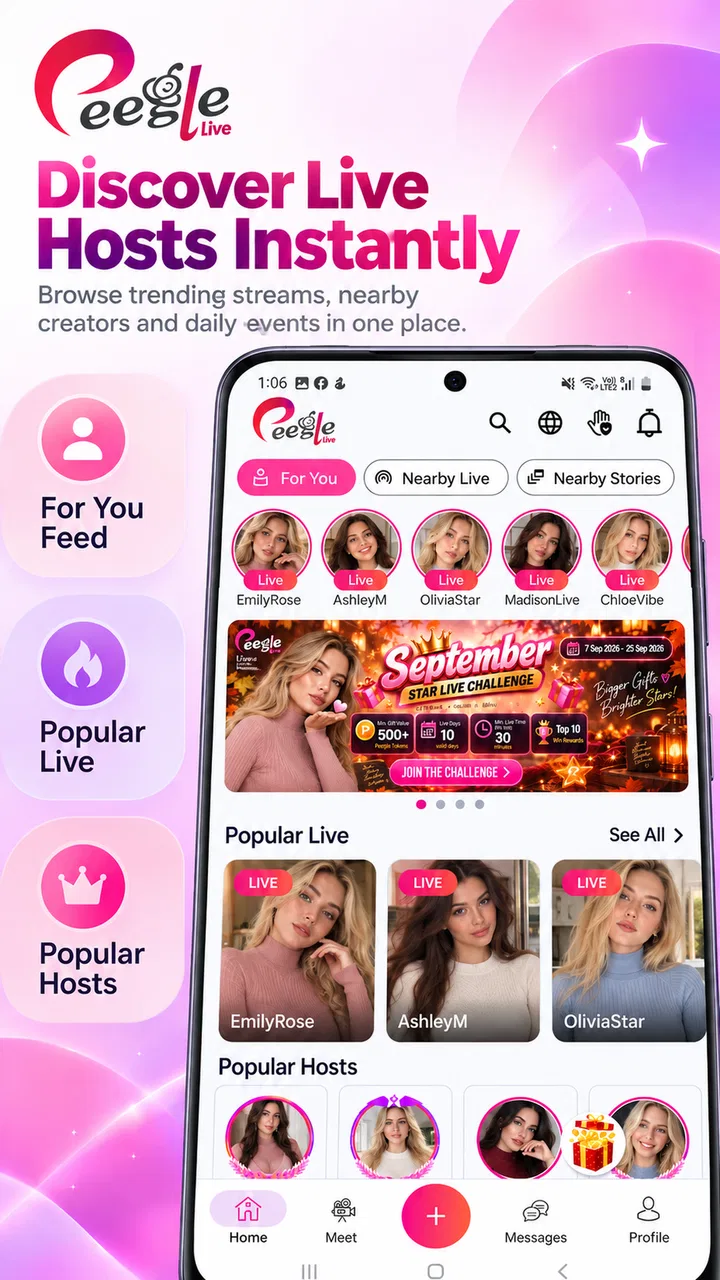
Peegle Live - Live Stream is a social live-streaming platform where users can watch real-time broadcasts, interact with hosts, send messages, and discover entertainment content. Depending on the available features and region, viewers may also be able to follow creators, participate in live chats, join interactive activities, and support broadcasters through virtual gifts or other in-app tools.
02Is Peegle Live - Live Stream free to download and use?
The app can generally be downloaded at no initial cost, but some features may involve optional purchases. Live-streaming platforms commonly offer virtual coins, gifts, subscriptions, or premium interactions that require real money. Before confirming any transaction, review the displayed price and payment details carefully. Parents should also check device purchase restrictions if children use the app.
03Do I need an account to watch live streams on Peegle Live?
Some content may be accessible without registering, but creating an account is usually necessary for interactive features such as commenting, following hosts, sending messages, saving preferences, or participating in live events. Registration may require basic information and could include third-party login options. Review the requested permissions and privacy settings before completing the sign-up process.
04Is Peegle Live - Live Stream safe for children and teenagers?
Because users can broadcast and communicate in real time, the content and conversations may vary significantly and are not always suitable for younger audiences. Parents should review the app’s age rating, privacy controls, reporting tools, and community guidelines before allowing access. It is also advisable to supervise live-chat activity, disable unnecessary purchases, and avoid sharing personal information.
05What should I check before downloading Peegle Live - Live Stream?
Before installing the app, check whether it is officially available in your country and whether your Android or iOS device meets the current system requirements. Read the store listing for permissions, privacy practices, age rating, and recent user feedback. A stable internet connection is important for smooth broadcasts, while mobile data usage can be high when watching live video for extended periods.
Pros
- Easy access to live streams from creators around the world.
- Interactive chat makes it simple to connect with broadcasters and viewers.
- Supports discovering new creators through personalized content suggestions.
- Live broadcasts can provide casual entertainment at any time.
- Useful social features encourage regular interaction and community building.
Cons
- Content quality can vary significantly between different live channels.
- Some streams may include mature or unsuitable content for younger viewers.
- Frequent notifications may become distracting without careful settings.
- In-app purchases or virtual gifts can lead to unexpected spending.
- A stable internet connection is needed for smooth
- uninterrupted streaming.

Peegle Live - Live Stream
Gallery